Have you ever walked down the street and suddenly seen a massive 3D dragon “flying” out of a corner building screen? Or perhaps you stumbled upon a picture online that looks like a regular landscape, but when you squint your eyes, a human face clearly emerges from the trees and rocks?
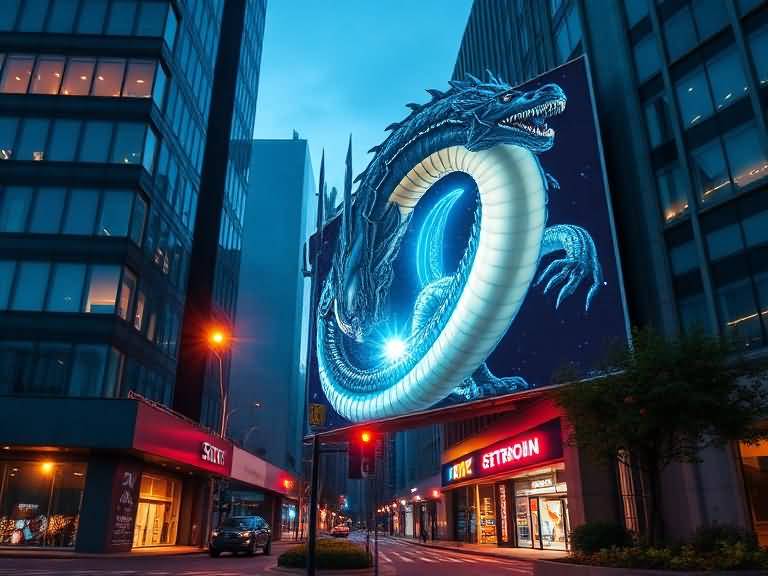
What master artists used to achieve with brushes, precise geometry, and shadows is now being done by powerful computer algorithms and Artificial Intelligence. Optical illusions have officially entered the digital age. Technology is tricking our brains faster, easier, and more convincingly than ever before in history.
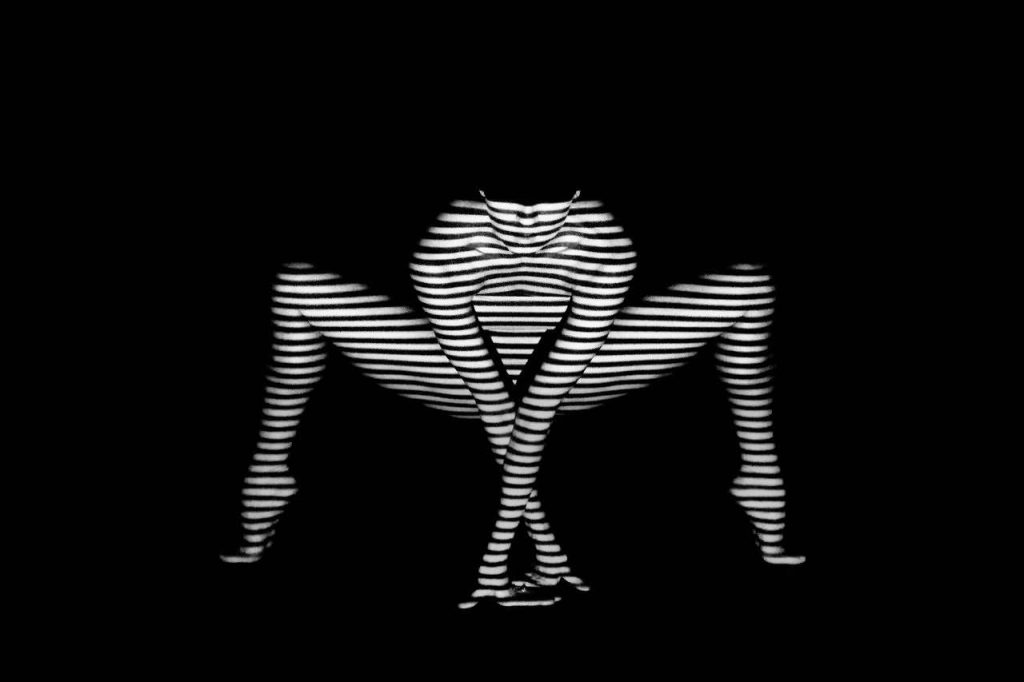
Here is how modern software and AI manipulate our minds—and why we can no longer trust our own eyes.
Anamorphic Art: 3D Illusions on City Billboards
The biggest hit in the world of modern visual tricks is the anamorphic 3D digital billboard. You can see them on the streets of Tokyo, New York, or London, where they draw massive crowds of amazed onlookers.
The trick behind these screens is actually quite simple, yet incredibly effective:
- Curved Screens: The displays on buildings are almost always positioned at a 90-degree angle on a street corner.
- Forced Perspective: The video content is designed strictly for one specific vantage point on the street. This is called forced perspective.
- Breaking the Frame: When an object inside the video (like a spaceship or a monster) crosses the “invisible” inner border of the screen, our brain automatically perceives that the object has stepped out into real, three-dimensional space.

As long as you are standing in the right spot on the pavement, your visual cortex stands no chance—you are tricked in a split second because your brain automatically merges false depth cues with the real environment.
How Artificial Intelligence is Changing the Game
While it used to take a human days or weeks to manually calculate and draw a complex geometric illusion, AI models can now do it in seconds. AI has brought a true revolution to the creation of visual deceptions through two incredible trends:
1. AI Hidden Art
This is currently one of the most popular forms of digital illusions online. Using advanced neural networks, creators can instruct a program to merge two completely different concepts. For instance, an AI can generate a beautiful beach or forest scene, but arrange the shadows, trees, and clouds so precisely that from a distance, the exact same image reveals a perfectly recognizable portrait or a hidden word. It is the modern digital equivalent of the classic hidden images found in psychology textbooks.
2. The Infinite AI Zoom
AI algorithms can now generate videos that continuously dive deeper and deeper into a single image. Every new detail we “enter” opens up a whole new world that is generated on the fly. This hypnotizing effect creates the illusion of infinite space without an end, literally locking the viewer’s attention to the screen.

Why Our Brains Fall for Digital Tricks So Easily
The human mind evolved to process information rapidly to save energy. To achieve this, the brain constantly uses “shortcuts” and makes assumptions based on expectations. For example, we subconsciously assume that light always comes from above and that objects in the distance must have fainter colors and lower contrast.
Modern technology exploits these exact evolutionary shortcuts. Pixels on modern high-resolution screens can simulate perfect shadows, depth, and light reflections that do not actually exist on that flat surface. When software combines these fake signals with our natural expectations, we see a three-dimensional object where there is only a flat display.

The digital era has shown us that illusions are no longer just fun tricks on paper. They have become a powerful tool in the hands of technology, and the line between what is real and what is digitally projected is becoming thinner than ever before.
Beppo de la Prince
for Amazing Videos


